
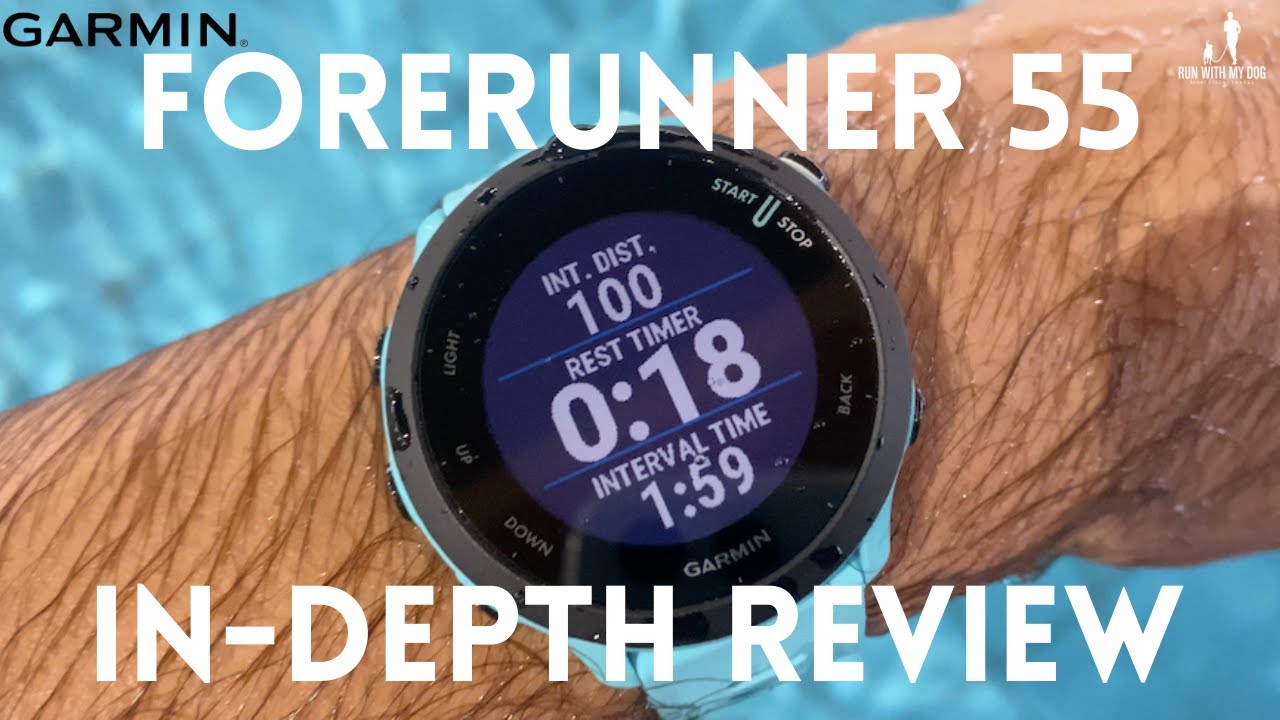
The next generation of Garmin running watches starts here — the Forerunner 55, direct successor to the Forerunner 45. After two weeks of running, cycling, gym sessions, and daily wear, here’s what I found.
Specs
Garmin’s most affordable GPS watch — around $200 USD.
Three colors: White, Black, and Aqua Blue (what you see here — it also matches my bike, so I’ve got a matching set).
- Weight: 35g — you won’t feel it
- Band: Standard 20mm quick release
- Battery: 14 days smartwatch mode, up to 20 hours GPS — accurate in my testing: ~7% per day, ~4% per hour of running
- Water rating: 5ATM
- Sensors: Optical HRM + built-in GPS
What’s missing: No barometric altimeter (no real-time elevation), no gyroscope (no gym movement detection).
Smartwatch Features
Incoming call and message notifications (view only), daily step tracking, sleep monitoring, weather forecast, calendar sync, LiveTrack, and a distress signal — all require your phone nearby.
Sport Profiles
Outdoor and indoor running, track running, outdoor and indoor cycling, pool swimming, walking, general cardio, elliptical, pilates, HIIT, stair climbing, and yoga.
New this year: pool swimming, yoga, and HIIT profiles — welcome additions.
Missing: No triathlon, no custom swim workouts, no strength training profile — a shame, since the target audience would benefit.
Training Tools
Daily Suggested Workouts: each day the watch recommends a run based on your fitness level. I didn’t use it heavily, but the concept is solid.
PacePro: plan a course and target finish time — Garmin calculates the optimal pace per segment based on terrain. The watch tells you in real time if you’re ahead, on track, or behind. Excellent for race strategy.
Training plans: download directly from the Connect app.
Sleep and Health
Accurate sleep tracking — correctly identified when I went to bed, when I woke during the night, and the breakdown between deep and light sleep. Also monitors breathing rate overnight.
Body Battery: estimates your energy level based on sleep, HRV, and recent activity. I found it surprisingly accurate — on days I felt off and the watch said “low battery,” it was right. Worth listening to.
Bottom Line
Garmin packed a lot into their cheapest watch. Excellent HRM, one of the best GPS receivers I’ve tested, comprehensive sleep analysis, daily suggested workouts, PacePro, and full interface support.
Downsides: No barometric altimeter or gyroscope, no triathlon or strength training profile, no custom swim workouts. The direct competitor — Coros Pace 2 — covers exactly what’s missing here.
Who it’s for: Anyone who wants a quality Garmin on a budget, a first GPS watch, or a runner who doesn’t need the full triathlon toolkit. After two weeks with it, I’m genuinely fond of it. And look at that Aqua Blue color.