
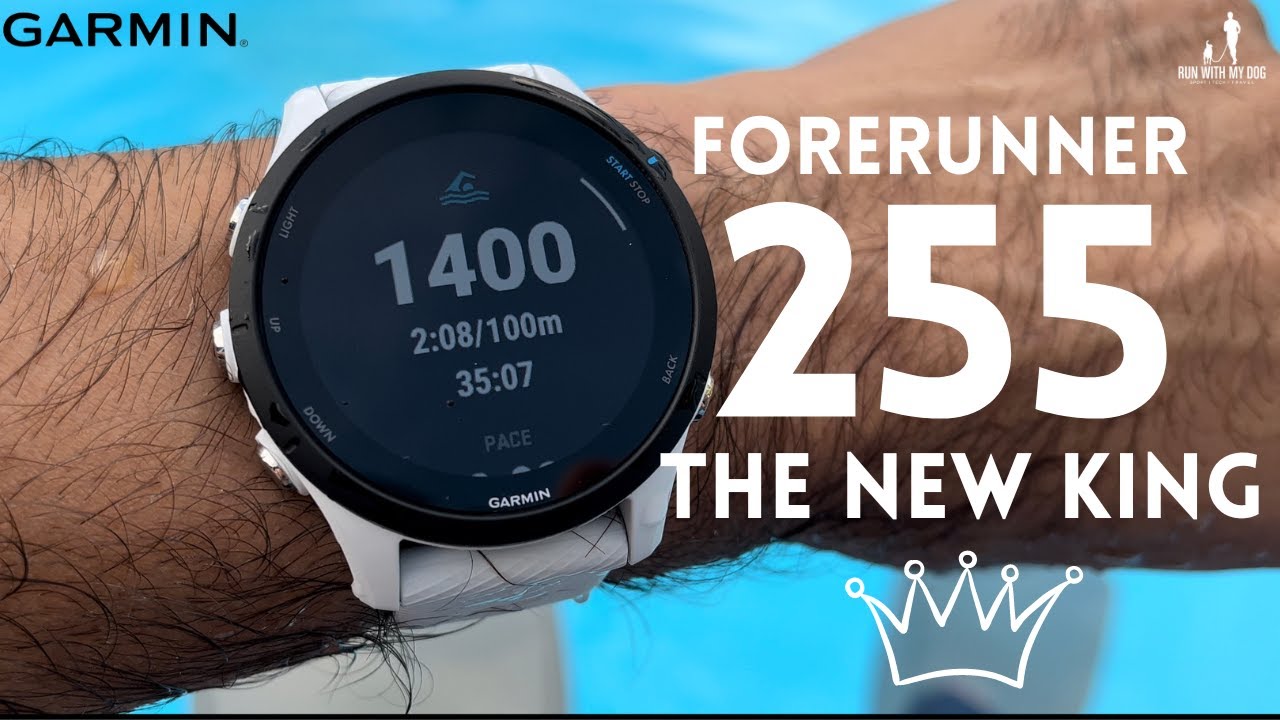
Garmin dropped a bomb. The Forerunner 245 was a best seller that athletes loved — but the 255 is something different than what anyone expected. After several days of testing across running, swimming, and cycling, here’s what I found.
Specs
Sizes: Regular (46mm, 1.3”) and Small “S” (41mm) — the S is aimed at smaller wrists and comes in pink and powder gray.
Music versions: Non-music at $350, music at $400. The music version comes in black or white; the non-music in grey or a nice dark blue.
Weight: 49g — barely noticeable on the wrist. Not as light as the FR55 or Coros Pace 2, but far from heavy.
Band: Standard 22mm quick release — tons of third-party options available.
Display: Transflective MIP — readable in any weather conditions, resolution 260×260, noticeably crisper than previous generations.
Battery: 14 days smartwatch mode, up to 30 hours GPS. With all systems on + music: 6.5 hours — enough for most people.
Water rating: 5ATM — pool, open water, rain. No scuba diving.
Storage: 4GB for music, apps, and widgets. Enough for Spotify playlists and podcast episodes.
Sensors: Elevate 4 optical HRM, blood oxygen, barometric altimeter, compass, gyroscope, accelerometer, thermometer, dual-band GPS.
The Feature That Changes Everything
Dual-band GPS at this price point. Unheard of before the 255. More accurate positioning, especially in urban canyons and tree cover — for $350.
Smartwatch Features
Incoming calls and messages (reply requires Android), daily step tracker, sleep tracking, weather, calendar sync, LiveTrack, distress signal, phone music controls, and Garmin Pay for contactless payments — also a first at this price.
Sport and Training
The sport profile list is comprehensive: all running types, indoor/outdoor cycling, pool and open water swimming, strength, yoga, pilates, winter sports, and — for the first time at this price — triathlon and multisport. Looking forward to testing that in my next race.
Daily Suggested Workouts: running and cycling recommendations based on your fitness metrics, adjusted automatically when you set an upcoming event.
Morning Report: customizable daily greeting with sleep data and what to expect from your body today. Introduced with the Fenix 7, now here.
Training Load and Training Status: understand your current balance between hard and easy sessions and adjust accordingly.
Garmin Connect IQ support — including the ability to download apps directly from the watch for the first time. I installed Stryd foot pod and Komoot for navigation.
PacePro and Up Ahead: set aid stations and points of interest on a course.
What’s missing: no maps (breadcrumb navigation only), no ClimbPro, no touchscreen, no Golf mode (I’m genuinely indifferent, but noted).
Sleep Tracking
Accurate in my testing — correctly identified when I went to bed, shows deep/light sleep breakdown, sleep score, and HRV for readiness assessment. Body Battery rounds it out with an energy level estimate for the day.
Bottom Line
The Forerunner 255 is Garmin’s mid-tier running watch — and it punches far above its price. Dual-band GPS, triathlon support, offline music, suggested workouts, Garmin Pay, PacePro, deep training analytics — all for $350.
Is it worth double the price of a Forerunner 55 or Coros Pace 2? For me, yes — if you want the full training tool package. If you don’t need all that, both of those are excellent at half the price.
Honestly, I think competition from Coros pushed Garmin to offer premium features at a mid-tier price point. The Forerunner 645 and 745 are effectively dead. This is their replacement — and it’s better.